
How to Get Back on Track With Habits: A Practical Reset Guide
Tenor
Tenor Editorial Team
You miss one workout.
Then you miss another.
You stop reading for a few days. Your morning routine disappears. The habit tracker that once had a satisfying run of completed days starts filling with gaps.
At some point, restarting feels harder than starting did.
If you're wondering how to get back on track with habits, the answer usually isn't to design a completely new life on Monday morning.
It's to make the next repetition easier.
A missed day doesn't erase the repetitions that came before it. Research on habit formation has found that missing one opportunity to perform a behavior did not materially affect the habit-formation process, although people varied considerably in how quickly behaviors became automatic.
So don't treat your tracker like a scoreboard you've lost.
Treat it like information.

Why Getting Back on Track Feels So Difficult
Restarting a habit can feel strangely harder than starting one.
When you start a new habit, you usually think about the future:
"I'm going to start exercising."
After a lapse, you're also looking backward:
"I was doing so well. Why did I stop?"
That creates a second problem on top of the original one.
You aren't only deciding whether to exercise.
You're also deciding how to interpret the fact that you haven't exercised recently.
This is where an important distinction helps:
A lapse is an event.
Giving up is a pattern.
Missing a workout because you were sick, travelling, busy, or exhausted is not the same thing as deciding that the habit no longer matters.
The goal of a reset is therefore not to erase the gap.
It's to prevent the gap from becoming permanent.
First: Don't Start Over
One of the most common reactions to a broken habit is to declare a complete reset.
New Monday.
New tracker.
New routine.
New rules.
New goals.
That can feel motivating for a few hours, but it can also recreate the same system that caused the problem.
Instead, ask:
What was already working before I stopped?
If you were reading every night for 15 minutes, you don't necessarily need a new reading system.
If you were walking after lunch, you may simply need to restore that cue.
If you were studying for 30 minutes each morning, the solution may be to restart the existing routine at a smaller scale.
Keep the useful parts.
Change the part that stopped working.

Step 1: Find Out Why the Habit Broke
Before changing the habit, identify what interrupted it.
Don't turn this into an investigation into your personality.
Look at the system.
Did your schedule change?
Maybe your habit depended on a routine that no longer exists.
For example:
Exercise after work.
Then your work schedule changes.
The old cue disappears.
Did the habit become too demanding?
Maybe you started with:
Workout for 60 minutes every day.
That might work during an unusually free week but collapse when life gets busy.
Did you remove the cue?
Maybe you used to read immediately after getting into bed.
Then you started scrolling on your phone first.
The behavior didn't necessarily become impossible.
The sequence changed.
Did you lose sight of the reason?
Sometimes the habit simply stops feeling connected to anything important.
Ask:
Why did I want this habit in the first place?
If the answer still matters, reconnect the behavior to it.
If the answer no longer matters, changing or removing the habit may be the correct decision.
Step 2: Restart With the Smallest Useful Version
Don't restart at your previous maximum.
Restart at the smallest version that still counts.
If your old habit was:
Run for 30 minutes.
Your restart could be:
Put on running shoes and walk for 10 minutes.
If your old habit was:
Read 30 pages.
Try:
Read two pages.
If your old habit was:
Study for two hours.
Try:
Study for 15 minutes.
If your old habit was:
Meditate for 20 minutes.
Try:
Meditate for two minutes.
The point isn't that two minutes of meditation is equivalent to 20 minutes.
It isn't.
The point is to lower the barrier to restarting the behavior.
Once the routine is active again, you can increase the amount.

Use a "minimum version" and a "normal version"
This is even better than permanently shrinking the habit.
For example:
Normal
Read 15 pages.
Minimum
Read 2 pages.
Or:
Normal
Workout for 30 minutes.
Minimum
Move for 5 minutes.
The minimum version is your fallback for difficult days.
It prevents the habit from depending on perfect circumstances.
Step 3: Restart Today, Not "On Monday"
"Next Monday" sounds organized.
It's also an easy way to postpone a restart.
If the habit can reasonably be performed today, do the smallest version today.
Not tomorrow.
Not after you've redesigned your tracker.
Not after you've bought new equipment.
Today.
If you missed your morning workout, you might take a short walk in the evening.
If you didn't read last night, read two pages tonight.
If you skipped studying this morning, do 15 minutes after dinner.
The goal is to create a new successful repetition as quickly as reasonably possible.
This doesn't mean forcing every habit into the current day. Some habits genuinely depend on timing or circumstances.
It means avoiding unnecessary delay.
Step 4: Rebuild the Cue
Habits become easier to repeat when the behavior occurs in a consistent context.
In research on habit formation, participants practiced chosen behaviors in consistent contexts, and automaticity generally increased with repetition. The research also found large individual differences in the time required for automaticity to develop.
If your old cue disappeared, create a new one.
Instead of:
"I'll exercise sometime tomorrow."
Try:
"After I finish my morning coffee, I'll put on my workout clothes."
Instead of:
"I'll read tonight."
Try:
"After I brush my teeth, I'll read two pages."
Instead of:
"I'll study when I have time."
Try:
"After dinner, I'll study for 15 minutes."
The more concrete the cue, the less you have to remember through sheer intention.

A simple restart formula
Existing cue → tiny behavior → immediate completion
For example:
Make coffee → read 2 pages → mark it done
or
Finish lunch → walk 10 minutes → mark it done
If you want to use habit stacking more deliberately, see our habit stacking guide for additional examples.
Step 5: Remove the Friction That Caused the Miss
Sometimes the habit didn't fail.
The environment made it unnecessarily difficult.
Ask:
What was between me and the behavior?
If you wanted to exercise but couldn't find your clothes:
Prepare them the night before.
If you wanted to read but kept reaching for your phone:
Put the book where the phone normally sits.
If you wanted to study but spent 20 minutes deciding what to study:
Choose tomorrow's task before ending today's session.
If you wanted to meditate but kept forgetting:
Attach it to an existing routine.
You don't always need more motivation.
Sometimes you need fewer steps between the cue and the behavior.
Step 6: Clean Up Your Habit Tracker
If your tracker is full of missed days, don't immediately delete everything.
The gaps contain information.
Look at the pattern.
One isolated gap
Probably not a major system problem.
Resume normally.
The same day every week
Your schedule may not match the habit.
Consider changing the day or creating a smaller version.
Long gaps around travel
Your routine may need a travel version.
Gaps after late nights
The habit may depend on sleep or energy more than you realized.
Gaps after busy workdays
Your current habit may be too large for your normal workload.
A habit tracker can therefore be more useful as a diagnostic record than as a perfect streak counter.
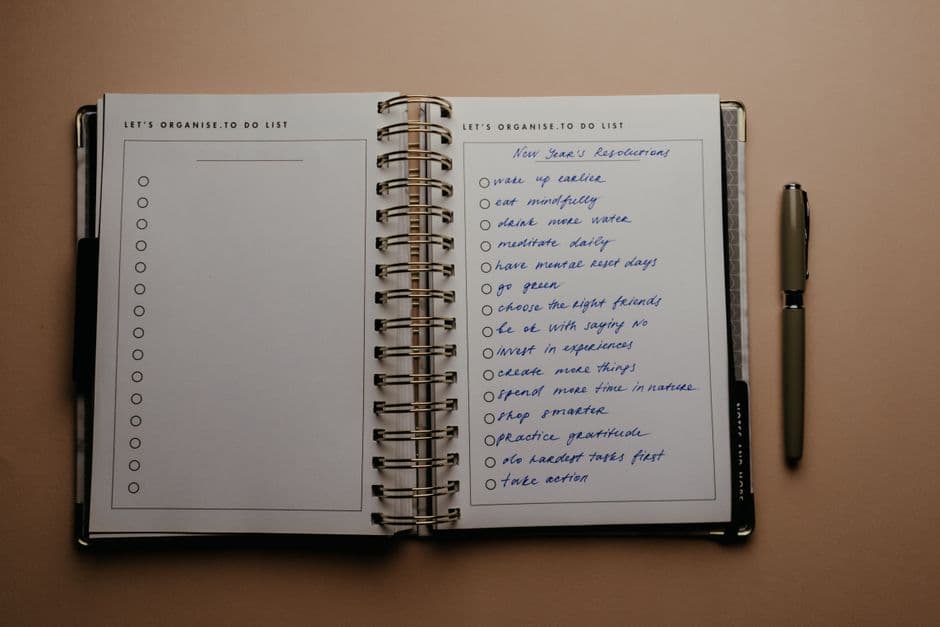
Don't erase the history just because the streak ended
If your tracker shows:
| Mon | Tue | Wed | Thu | Fri | Sat | Sun | Mon |
|---|---|---|---|---|---|---|---|
| ✓ | ✓ | ✓ | ✓ | ✓ | — | — | ✓ |
That's useful information.
It tells you:
I maintained this behavior for five days, had a two-day interruption, and then restarted.
That is more informative than deleting the record and pretending the new streak is the whole story.
Your history shows what actually happened.
Step 7: Reduce Your Active Habits
A reset is a bad time to add ten new habits.
If your previous routine contained eight habits and you stopped doing all of them, don't immediately rebuild all eight.
Choose the one that matters most.
Then perhaps add a second once the first is stable again.
This is especially important because your problem may not be a lack of discipline.
The system may simply have too many moving parts.
If you're unsure how many behaviors belong in your tracker, see our guide on how many habits you should track at once.
A smaller routine isn't a failure.
It's a version designed for real life.
Step 8: Don't Try to "Make Up" for Missed Days
You don't need to compensate for a missed reading session by reading twice as much today.
You don't need to do two workouts because you skipped yesterday.
You don't need to study for four hours because you missed one hour.
The purpose of a habit is repetition, not repayment.
Resume the normal behavior—or a smaller version of it.
A missed opportunity is already in the past.
Today's repetition is what you can control.

Step 9: Separate the Streak From the Habit
A streak is a record of consecutive completions.
A habit is a behavior you are trying to make part of your life.
Those are related, but they aren't identical.
Suppose your tracker shows:
| Period 1 | Gap | Period 2 | Gap | Period 3 |
|---|---|---|---|---|
| 27 days ✓ | Missed | 18 days ✓ | Missed | 40 days ✓ |
The streaks are three different numbers.
But the broader behavior tells a different story:
You repeatedly returned to the habit.
That recovery matters.
Research on habit formation found that missing one opportunity did not materially affect the habit-formation process, which is one reason a single missed day shouldn't automatically be treated as a reset of all progress.
The important caveat is that this does not mean missed days don't matter at all. Repeated consistency was associated with better habit-formation trajectories in the study.
So the useful message isn't:
"Missing doesn't matter."
It's:
"One miss isn't a reason to stop."
Step 10: Use a Recovery Rule
You can make restarting easier by deciding in advance what you'll do after a miss.
For example:
If I miss once, I do the minimum version the next opportunity.
Or:
If I miss twice, I reduce the habit.
Or:
If I miss three times, I redesign the cue.
These aren't scientific laws.
They're personal operating rules.
The benefit is that you don't have to invent a response while you're frustrated.
You already know what to do.
What If You Missed a Week—or Longer?
A longer break may require more adjustment than a single missed day.
Start by asking:
Is the original habit still relevant?
If yes, keep it.
Is the original size still realistic?
If no, reduce it.
Is the original cue still available?
If no, create another one.
Did your circumstances fundamentally change?
If yes, redesign the habit around your current life.
Are you physically or mentally ready for the original version?
If not, choose an appropriate smaller version.
For exercise in particular, a long break can require more caution than simply returning at the previous intensity. If you're restarting after illness, injury, or a substantial period away from exercise, appropriate professional guidance may be warranted.
The principle is:
Restart the behavior you can sustain now, not the routine you wish you were still doing.
What If You Feel Guilty About the Missed Days?
Guilt can make a restart feel heavier than it needs to be.
You don't have to pretend the miss didn't happen.
Just don't turn it into an identity statement.
Instead of:
"I'm terrible at consistency."
Try:
"This routine stopped working under these circumstances."
That's a much more useful problem to solve.
There is also experimental evidence that self-compassion can support self-improvement motivation in several contexts.
That doesn't mean you should excuse every behavior.
It means that responding to a setback without unnecessary self-attack can be compatible with trying to improve.
Build a Restart Plan Before You Need It
The best time to decide how you'll recover from a missed habit is before you miss it.
For each important habit, define:
Normal version
What I normally do.
Minimum version
What counts on a difficult day.
Cue
What tells me to start.
Backup cue
What I do if the normal opportunity disappears.
Recovery rule
What I do after a miss.
For example:
| Element | Example |
|---|---|
| Habit | Read |
| Normal | 15 pages |
| Minimum | 2 pages |
| Cue | After brushing teeth |
| Backup | After dinner |
| Recovery | Read minimum version at next opportunity |
Now a bad day doesn't require a new plan.
You already have one.

A 7-Day Habit Reset Plan
If you need a concrete restart, use this as a starting framework.
Day 1: Choose one habit
Don't restart your entire life.
Choose the behavior that matters most.
Day 2: Make it smaller
Define the minimum version.
Day 3: Restore the cue
Attach it to something reliable.
Day 4: Remove one obstacle
Prepare the environment.
Day 5: Repeat
Don't increase the difficulty yet.
Day 6: Review
Ask:
What made the habit easier?
What made it harder?
Day 7: Decide
Keep the habit as-is, increase it slightly, or redesign it.
The purpose of the seven days isn't to "form a habit in seven days."
There is no universal seven-day habit-formation rule. Research shows substantial variation between people and behaviors.
The seven-day period is simply a manageable reset window.
What Not to Do When Restarting a Habit
Don't create a perfect new routine
You don't need a complete lifestyle overhaul.
Don't double the workload
Missed days aren't debt.
Don't delete all your history
The gaps can tell you what needs fixing.
Don't add five new habits
Fix the one that matters first.
Don't wait for motivation
Make the next action easier instead.
Don't treat one miss as proof that the system failed
Look for patterns before changing everything.
Don't copy someone else's routine
Your restart needs to fit your current circumstances.
How to Know Whether Your Habit Needs a Reset or a Redesign
| Problem | Better response |
|---|---|
| Missed once | Resume |
| Missed because of an unusual day | Resume normally |
| Missed repeatedly because it's too large | Shrink it |
| Missed because the cue disappeared | Create a new cue |
| Missed because the environment creates friction | Change the environment |
| Missed because your schedule changed | Change the timing |
| No longer care about the goal | Reconsider the habit |
| Habit conflicts with health or other constraints | Reassess appropriately |
This distinction matters because repeatedly "restarting" the same oversized habit doesn't solve the underlying problem.
Sometimes you don't need another restart.
You need a better design.
Frequently Asked Questions
How do I get back on track with habits?
Start with one habit, identify why it stopped, reduce it to a manageable version, restore a reliable cue, and perform the smallest useful version at the next realistic opportunity.
How do I restart a habit after missing a few days?
Don't try to compensate for the missed days. Resume the habit at its normal level if that still feels realistic, or temporarily use a smaller version.
Is it okay to miss a day of a habit?
Yes. Missing one opportunity does not necessarily erase your progress. Research on habit formation found that missing one opportunity did not materially affect the habit-formation process, although consistency overall was associated with better habit-formation trajectories.
Should I start my habit tracker over after missing days?
Usually, no. Keeping the history preserves useful information about your actual behavior. A gap can help you identify where the routine needs adjustment.
What if I broke a long habit streak?
The streak ended, but the behavior doesn't have to. Focus on the next repetition rather than trying to recreate the old streak immediately.
How long does it take to get back into a habit?
There is no universal number of days. Habit automaticity develops at different rates depending on the person and behavior. Research has found substantial individual variation.
Should I use the "never miss twice" rule?
It can be a useful personal rule, but it isn't a scientific threshold. Its value is practical: it gives you a predefined response to a missed day and encourages a quick return.
What should I do if I keep restarting the same habit?
Stop treating the problem as a motivation problem and diagnose the system. Look at the habit's size, cue, timing, environment, and relevance. If the same design keeps failing, redesign it.
The Bottom Line
Getting back on track with habits isn't about recreating the perfect streak you had before.
It's about making the next repetition possible.
When a habit breaks:
- Keep the useful history.
- Find out what interrupted it.
- Shrink the behavior if necessary.
- Restore or replace the cue.
- Remove unnecessary friction.
- Restart at the next realistic opportunity.
- Use the tracker to identify patterns rather than punish yourself.
- Redesign the system if the same problem keeps returning.
You don't need a perfect record to build a consistent habit.
You need a system that makes it easier to come back.
Track Your Comeback With Tenor
If you want a simple way to track habits without turning missed days into guilt, Tenor gives you a clean space to do it.
Tenor lets you:
- Track daily and weekly habits with a minimal interface
- See your consistency over time without streak pressure
- Use recovery rules and minimum versions to restart easily
- Keep your history so you can learn from patterns


Enjoyed this? Share it with a friend.
Share on X