
Why Most Habit Trackers Fail (And How to Actually Stay Consistent)
Tenor
Tenor Editorial Team
Why Habit Tracking Often Fails
Most people do not fail at habits because they are lazy. They fail because the system gets in the way.
A habit tracker should make consistency easier, not harder. But many apps turn a simple action into a mini project: open the app, find the habit, confirm the entry, edit the date, choose a schedule, and then repeat that same flow every day. That friction adds up.
The result is predictable. You stop logging. Then the streak breaks. Then the app starts to feel like work.
The best habit tracker is the one you can use in real life, not just admire in the app store.

What Actually Makes a Habit Stick
Habits become durable when the action is easy to repeat in a stable context. In practice, that means the tracking flow needs to be fast, visible, and low effort.
A good habit system usually has three qualities:
- Low friction. You can complete the action in seconds, not minutes.
- Clear feedback. You can see progress without digging through menus.
- Flexible scheduling. The habit fits your life instead of forcing your life to fit the app.
If a habit app makes tracking harder than the habit itself, it is working against you.
The Hidden Cost of Friction
Small moments of resistance are easy to ignore in the beginning. You do not notice them on day one because motivation is still high.
But a habit is judged over weeks, not minutes.
If a tracker slows you down every day, you start to skip logging on busy mornings. Then you miss one update, then two. Eventually the habit record stops reflecting your actual behavior, and the app stops feeling trustworthy.
That is why the interface matters. A habit tracker is not just a place to store data. It is part of the behavior loop itself.
One-Tap Tracking Changes the Experience
This is where a simpler habit tracker makes a huge difference.
Instead of making you confirm every completion through multiple screens, Tenor lets you mark a habit done in one tap and undo it with one tap if needed. That sounds small, but it changes how often you actually log.
Why it matters:
- You are more likely to record habits when the action is immediate.
- You are less likely to skip logging because you are busy.
- You are less likely to abandon the app because it feels heavy.
A tracker should be invisible when you need speed and visible when you need motivation. That is the balance Tenor aims for.
What to Look for in a Habit Tracker
If you are comparing Android habit tracker apps, focus on these features instead of flashy extras:
1. Fast completion flow
Can you mark a habit complete instantly?
2. Flexible schedules
Can you set daily, weekly, monthly, or custom goals?
3. Visual progress
Can you see streaks, charts, or a calendar view?
4. Useful reminders
Can the app remind you without becoming annoying?
5. Offline-first design
Can the app still work when you do not want another account or sync layer?
6. A clean interface
Can you understand your habits at a glance?
If an app has all six, it is much more likely to become part of your routine.
Why Simplicity Beats Complexity
Some apps try to be habit tracker, planner, task manager, journal, and analytics dashboard all at once. That can sound powerful, but it often creates confusion.
If your goal is consistency, a smaller and calmer tool usually works better. You do not need a command center. You need a system you will return to every day.
That is why Tenor focuses on the habit itself:
- mark it done quickly,
- see your progress clearly,
- keep your schedule flexible,
- and avoid unnecessary friction.
Flexible Scheduling Matters More Than People Think
A habit is easier to keep when it fits your actual week.
For example:
- “Read 20 minutes” may be daily.
- “Gym” may be three times a week.
- “Weekly review” may only happen on Sundays.
- “Water plants” may happen every few days.
Good habit trackers let you set those patterns without forcing everything into the same template.
Tenor supports flexible habit goals so your system matches your real routine. That makes it easier to keep habits that are realistic, not just aspirational.
Common Mistakes When Choosing a Tracker
People often choose the wrong app for reasons that sound good in the moment:
- They pick the one with the most features.
- They choose something visually impressive but hard to use daily.
- They install a tracker that mixes too many unrelated workflows together.
- They assume more analytics will automatically create more consistency.
In reality, the best app is often the one that disappears into the background. The less effort it takes to keep the system alive, the more likely you are to keep using it.
The Best Habit Tracker Is the One You Will Keep Using
A lot of people ask for the "best" habit tracker, but the real answer is simpler: choose the one that reduces resistance.
If the app is fast, clear, and calm, you will use it more. If it is cluttered, slow, or overly gamified, you will eventually stop opening it.
That is the core reason Tenor is designed the way it is. It is built to help you actually track habits, not just plan them.
Start Small
If you want a practical way to begin, do not track everything at once.
Start with three habits:
- one health habit,
- one work habit,
- one personal habit.
Track them for one week. Keep the process simple. Focus on consistency, not perfection.
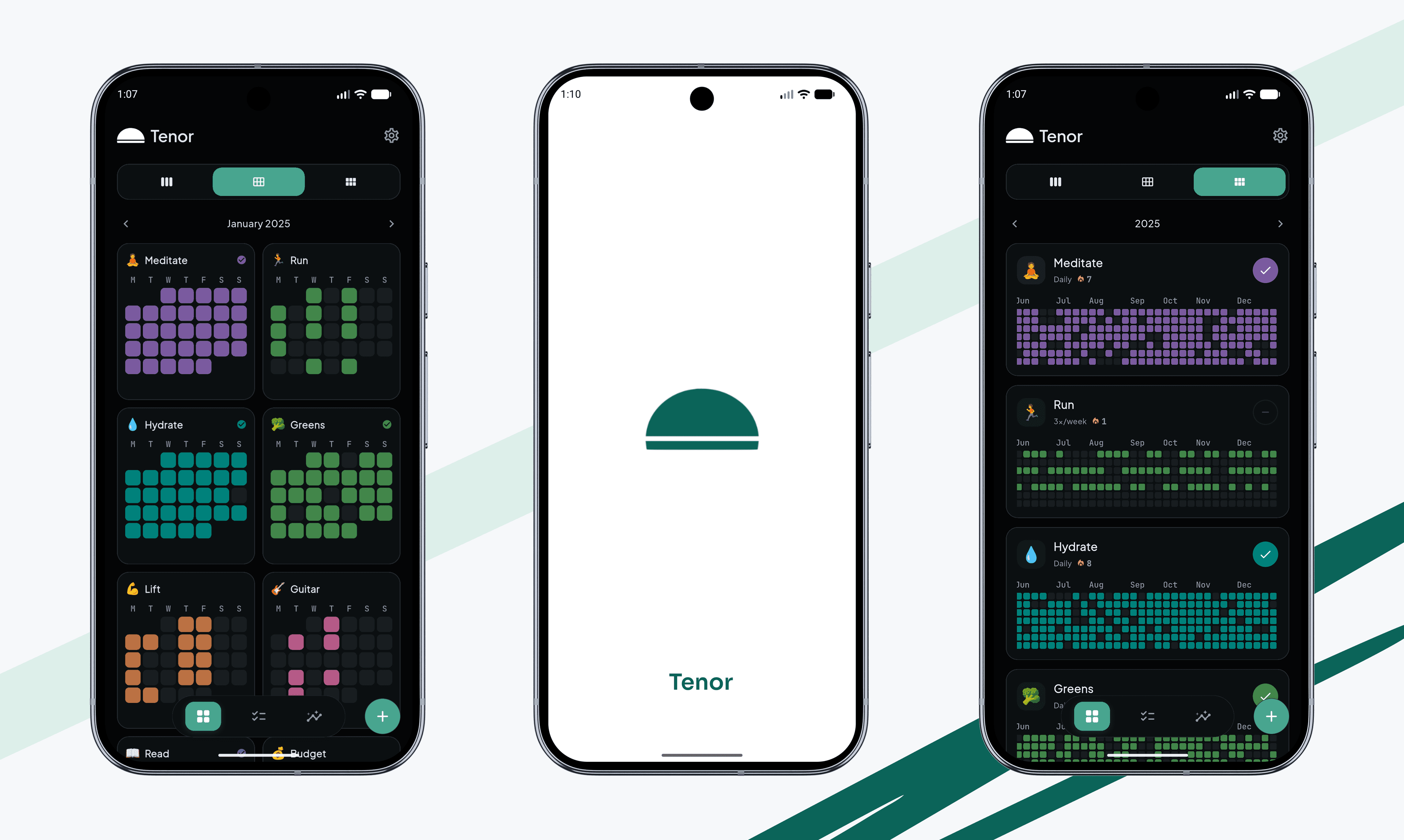
 and start with one tap today.
FAQ
What is the biggest reason habit trackers fail?
The most common reason is friction. If tracking takes too long or feels annoying, people stop logging consistently.
Should I choose a habit tracker with lots of features?
Only if those features help you stay consistent. A simpler app is often better than a feature-heavy one you stop using.
Is one-tap tracking actually useful?
Yes. Reducing the number of steps required to log a habit makes it much more likely that you will keep using the app every day.
What kind of habit tracker works best for Android?
The best Android habit tracker is one that is fast, flexible, clear, and easy to open every day without extra effort.
Keep Going
If you want to see how visual progress can keep you motivated, read our guide on habit streak calendars and stats. If you want a tracker that feels personal, see how widgets, icons, and colors can make the app fit your style.
Enjoyed this? Share it with a friend.
Share on X