
Habit Tracker vs To-Do List: What's the Difference?
Tenor
Tenor Editorial Team
A to-do list is for things you need to finish. A habit tracker is for things you want to repeat.

That is the simplest way to understand the difference.
"Reply to an email" is a task. Once you do it, you are finished.
"Read for 20 minutes" is a habit. Completing it today does not mean you are done forever. You want to repeat it tomorrow, next week, and eventually as part of your normal routine.
The distinction sounds small, but it changes how you plan, track, and evaluate your progress.
Habit Tracker vs To-Do List: The Quick Answer
Use a to-do list for finite tasks with a clear finish line.
Use a habit tracker for recurring behaviors you want to perform consistently over time.
| To-Do List | Habit Tracker | |
|---|---|---|
| Main purpose | Manage tasks | Track repeated behaviors |
| Typical item | Send an email | Read 10 pages |
| Completion | Usually one-time | Repeated over time |
| Focus | What needs to get done | How consistently you do something |
| Useful for | Projects, errands, deadlines | Routines and behavior change |
| Progress view | Open → completed | Pattern over days/weeks/months |
Some activities can fit either system depending on why you are tracking them. That is where things get interesting.
What Is a To-Do List?
A to-do list is a system for capturing and organizing things that need to be completed.
Typical tasks include:
- Reply to an email
- Submit an application
- Buy groceries
- Finish a presentation
- Call the bank
- Book a dentist appointment
- Fix a broken shelf
- Pay a bill
These items usually have a defined endpoint.
Once you finish the task, it can be checked off and removed from your active workload.
A to-do list therefore answers:
What do I need to get done?
To-do lists are particularly useful when you are managing several unrelated responsibilities at once. A project may contain ten different actions, each with its own deadline or dependency, and a task list gives you a place to manage them.
What Is a Habit Tracker?
A habit tracker is designed for repeated behavior.
Instead of asking whether a task has been permanently completed, it records whether you performed a behavior according to the schedule you chose.
Examples include:
- Exercise three times a week
- Read every evening
- Practice a language
- Meditate
- Take a daily walk
- Journal
- Practice coding
- Go to bed at a consistent time
A habit tracker answers:
Did I do the behavior, and how consistently am I doing it?
That second question is the important one.
A single workout tells you that you exercised once.
A month's worth of tracking can show whether exercise is actually becoming part of your routine.
The Real Difference Is the Type of Progress You Care About
A task list is centered around completion.
A habit tracker is centered around consistency.
Consider these two examples:
Task
"Write my résumé."
You have one outcome. The task is complete when the résumé is finished.
Habit
"Practice writing for 20 minutes."
There is no permanent finish line. The point is to repeat the behavior.
That is why putting every habit into a to-do list can become frustrating.
If "read," "exercise," and "meditate" are permanently appearing as unfinished tasks, your task system can start to feel like a list of things you are never quite done with.
A habit tracker changes the frame. You are not trying to eliminate the item. You are watching a repeated behavior over time.
What Should Go in a Habit Tracker?
A good habit is usually a behavior you expect to repeat and want to become more consistent with.
Good candidates include:
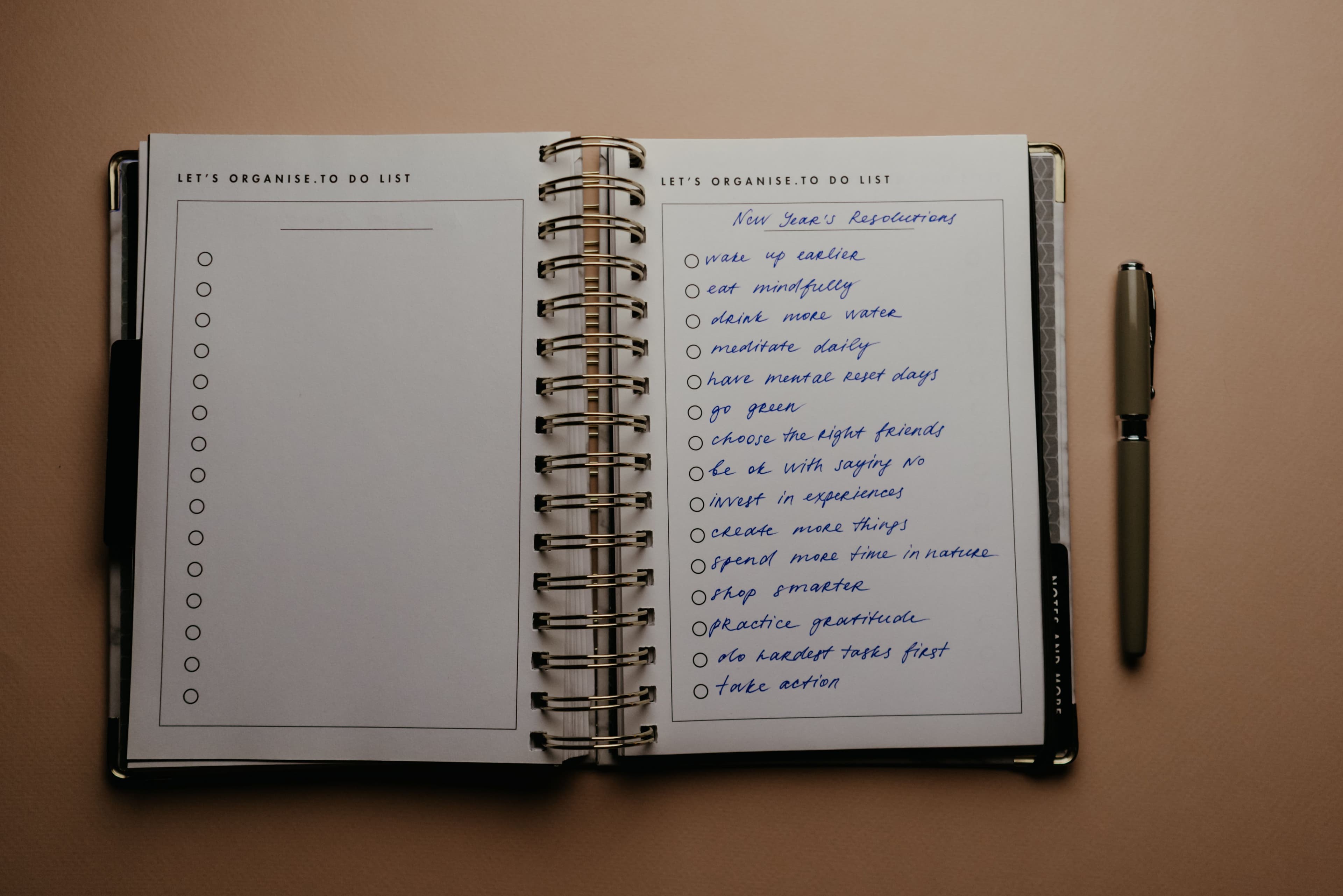
Health and fitness
- Walk for 20 minutes
- Stretch
- Exercise
- Drink water
- Sleep at a target time
Learning
- Read 10 pages
- Practice a language
- Study for 30 minutes
- Practice coding
Personal routines
- Journal
- Meditate
- Plan tomorrow
- Practice an instrument
The exact behavior matters less than the structure.
"Be healthier" is difficult to track because it is vague.
"Walk for 20 minutes" is much easier to evaluate.
Likewise, "learn programming" describes a goal.
"Practice coding for 30 minutes" describes a behavior.
What Should Stay on Your To-Do List?
Use your task list for items that have a defined completion point.
Examples:
- Submit a report
- Buy groceries
- Reply to a client
- Renew a subscription
- Schedule an appointment
- Prepare slides for Monday's meeting
- Research three laptops
These tasks can be important and recurring, but recurrence alone does not automatically make something a habit.
That distinction is worth understanding.
Habit or Recurring Task? They Are Not Always the Same
Consider:
"Clean the bathroom every Saturday."
This repeats every week, but you may still think of it as a recurring task.
Now consider:
"Walk for 20 minutes after dinner."
This is much more naturally understood as a repeated behavior you are trying to establish.
A useful question is:
Am I managing an obligation, or am I building a behavior?
If your focus is getting a specific responsibility completed, a recurring task may make more sense.
If your focus is building consistency around a behavior, a habit tracker is usually the better fit.
There is no universal rule. The purpose of the system matters more than the label.
Why a Habit Tracker Can Show Something a To-Do List Doesn't
Imagine your task list contains:
- Exercise
- Read
- Study
You complete all three today.
Great.
But what happens tomorrow?
The same three items return.
After a month, you may know that you completed them today and perhaps yesterday, but the task list is not primarily designed to show the larger pattern.
A habit tracker can make that pattern explicit:
| Habit | Mon | Tue | Wed | Thu | Fri | Sat | Sun |
|---|---|---|---|---|---|---|---|
| Exercise | ✓ | — | ✓ | ✓ | — | ✓ | — |
| Reading | ✓ | ✓ | ✓ | — | ✓ | ✓ | ✓ |
| Study | ✓ | — | ✓ | ✓ | ✓ | — | ✓ |
Now you can ask better questions.
Did you exercise four times this week?
Which days did you usually miss?
Is reading becoming more consistent?
Are you trying to track a habit that does not fit your actual schedule?
That is the value of historical tracking.
A Habit Tracker Is Not a Streak Machine
One of the easiest ways to make habit tracking unpleasant is to treat every missed day as failure.
But the purpose of tracking is to see behavior, not to prove that you are perfect.
A missed day can tell you something useful.
Maybe your target frequency is unrealistic.
Maybe the behavior takes longer than you expected.
Maybe there is no obvious cue for doing it.
Maybe your chosen time conflicts with your schedule.
A useful tracking system helps you notice these patterns instead of simply turning them into guilt.
Even habit-formation research does not support the idea that one missed opportunity automatically destroys progress. Habit development varies substantially between individuals and behaviors.
Can You Use a Habit Tracker and a To-Do List Together?
Yes. For many people, using both is actually the clearest approach.
Think of them as two different layers.
Your to-do list
Use it for:
Things I need to complete.
Your habit tracker
Use it for:
Things I want to keep doing.
For example, suppose you are learning programming.
Your habit tracker might contain:
Practice coding — 30 minutes
Your to-do list might contain:
- Finish Python assignment
- Read the API documentation
- Fix authentication bug
- Submit project
The habit is the ongoing behavior.
The tasks are the specific work created by that behavior.
That separation can make both systems easier to understand.
What About Daily Routines?
Morning and evening routines are another area where the distinction can get blurry.
Suppose your morning routine is:
- Drink water
- Stretch
- Read
- Plan the day
You could put the entire routine into a task list.
But if the point is to establish those behaviors as recurring routines, tracking the individual behaviors can be more informative.
On the other hand, if your concern is simply:
"What do I need to do before leaving the house?"
a checklist may be enough.
Again, the right tool depends on what you are trying to manage.
How Do You Decide Whether Something Is a Habit or a Task?
Use this simple test.
Put it on your to-do list if:
- It has a clear finish line.
- You expect to complete it once.
- It belongs to a particular project.
- It has a deadline or specific deliverable.
Put it in your habit tracker if:
- You expect to repeat it.
- Consistency matters more than one-time completion.
- You want to see a pattern over time.
- You are trying to make the behavior part of your routine.
Use both when:
- A recurring behavior creates specific tasks.
- You need to track the behavior while also managing related work.
- Your habit is broad but the individual actions change from day to day.
Is a Habit Tracker Better Than a To-Do List?
Neither is universally better.
They solve different problems.
A to-do list is better for task management.
A habit tracker is better for behavior tracking.
The mistake is expecting one tool to do the other's job perfectly.
Trying to use a to-do list as a habit tracker can make recurring behaviors feel like never-ending unfinished work.
Trying to use a habit tracker as a project-management system can leave important deadlines, dependencies, and one-off actions difficult to manage.
The simplest system is often the one that keeps those two categories clear.
A Simple Productivity Setup
You do not need a complicated productivity stack.
A very simple setup could be:
To-do list
Things that need to be finished.
Habit tracker
Behaviors that need to be repeated.
Calendar
Appointments and events that happen at specific times.
Each tool has one primary responsibility.
That separation can be more useful than adding more features to one application.
Frequently Asked Questions
Is exercise a habit or a task?
Usually a habit when the goal is to exercise consistently. A specific workout, such as "complete today's 5 km run," can also be treated as a task. The difference is whether you are tracking the ongoing behavior or completing a particular activity.
Is reading a habit or a task?
If you want to read regularly, it is generally better treated as a habit. "Read 10 pages today" is a repeatable behavior; "finish this book by Friday" is a project-like task.
Are recurring tasks the same as habits?
Not necessarily. Both repeat, but recurring tasks are usually obligations with defined completion points, while habits are behaviors you are trying to perform consistently.
Can I track habits in a to-do app?
Yes. Many task-management apps allow recurring items or habit-like workflows. The limitation is that a task list is primarily designed around completion, while a dedicated habit tracker is built around repeated behavior and historical consistency.
Should I use a habit tracker and a to-do list?
You can, especially when you regularly deal with both ongoing habits and one-time responsibilities. Keeping them separate can make each system easier to use.
The Bottom Line
A to-do list helps you finish things. A habit tracker helps you repeat things.
Use a task list for emails, errands, projects, deadlines, and one-time responsibilities.
Use a habit tracker for exercise, reading, studying, meditation, routines, and other behaviors where consistency matters.
And remember that some activities can reasonably fit either category. The important question is not what an app calls the item.
It is:
What kind of progress am I actually trying to see?
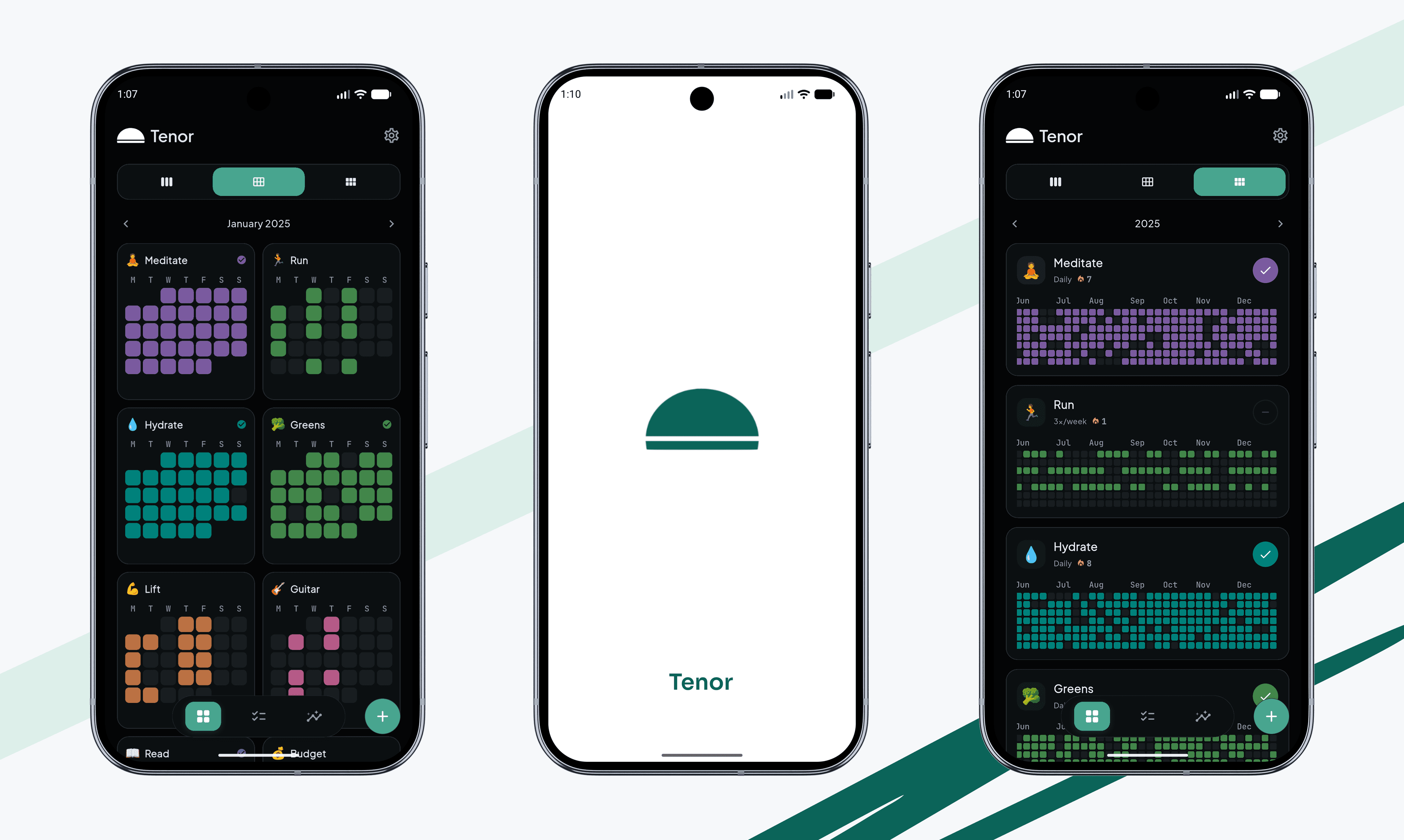
If you want a simple way to keep recurring behaviors separate from everyday tasks, a dedicated habit tracker such as Tenor can give those behaviors their own focused space.

Related Reading
If you want to understand why so many habit apps fall short, read why most habit trackers fail. For a comparison of the best Android apps of 2026, see our guide to best habit tracker apps for Android. If you are wondering how many habits to track, see our guide on how many habits should you track at once.
Enjoyed this? Share it with a friend.
Share on X